
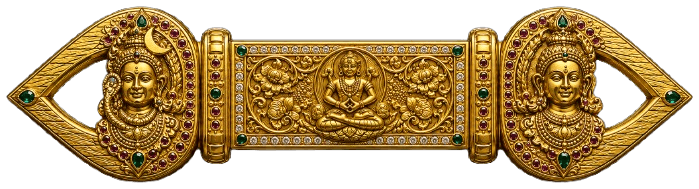
Yujya Dharma (युज्य धर्म, Yujya Dharma) is the third of the five dharmas of Siddha Dharma. The tradition also calls it Miśra Mārga (मिश्र मार्ग), the mixed path, and its practitioner a saṃyogī (संयोगी), one who joins.
The name comes from the root yuj, to yoke, to join, the same root that gives the word yoga. Yujya is that which is to be joined.
Section 01
What this dharma is
Yujya Dharma joins what other paths keep apart. Devotion, bhakti; knowledge, gyan; and action, karma: the three are practised together, in one life, in a harmonious blend, and none of the three is treated as the real path with the other two as supports.
Many traditions ask a seeker to decide what kind of seeker he is, devotee or student or worker, and treat the other two as lesser or preparatory. Siddha Dharma has a dharma with a name for the person who is all three at once.
Section 02
Its place among the five
Yujya Dharma is the integrating one. In a sense it is the shape of the whole tradition in miniature, for Siddha Dharma holds five paths under one roof and calls the arrangement inclusive, and Yujya Dharma holds three practices in one practitioner and calls that inclusive too. Same word, both times.
Its practitioner is the saṃyogī. He is joined, and he joins.
Section 03
What its people hold
- Bhakti, gyan and karma are three faces of one practice, and a life that holds all three is not a divided life.
- Balance is itself a spiritual attainment. To keep the three in proportion, without one swallowing the others, is the discipline of this dharma.
- The mixed path is a complete path. It is not the beginner's road before one specialises.
Section 04
Its granthas and Siddhas
Reserved for a future entry from the tradition's record.
Section 05
Its practices
Reserved for a future entry from the tradition's record.
Section 06
Yujya Dharma in a modern frame
There is an honest objection, and people inside traditions make it as often as scholars do: a path that combines everything commits to nothing, and “mixed” is the word a tradition reaches for when the pure types have been named and something is left over.
There is a fair point in that. The tradition's answer is in the name it chose. It did not call this the remainder. It called it yujya, that which is to be joined, from the root that gives yoga itself, and it gave the practitioner the honourable title of saṃyogī. A tradition names as a duty the thing it thinks is hardest, and holding devotion, knowledge and action in one proportion, for years, through marriages and illnesses and the ordinary erosion of a working life, is indeed harder than excelling at one of them. Anyone who has tried it knows which of the five dharmas they have actually been living.